What Net Metering Actually Is
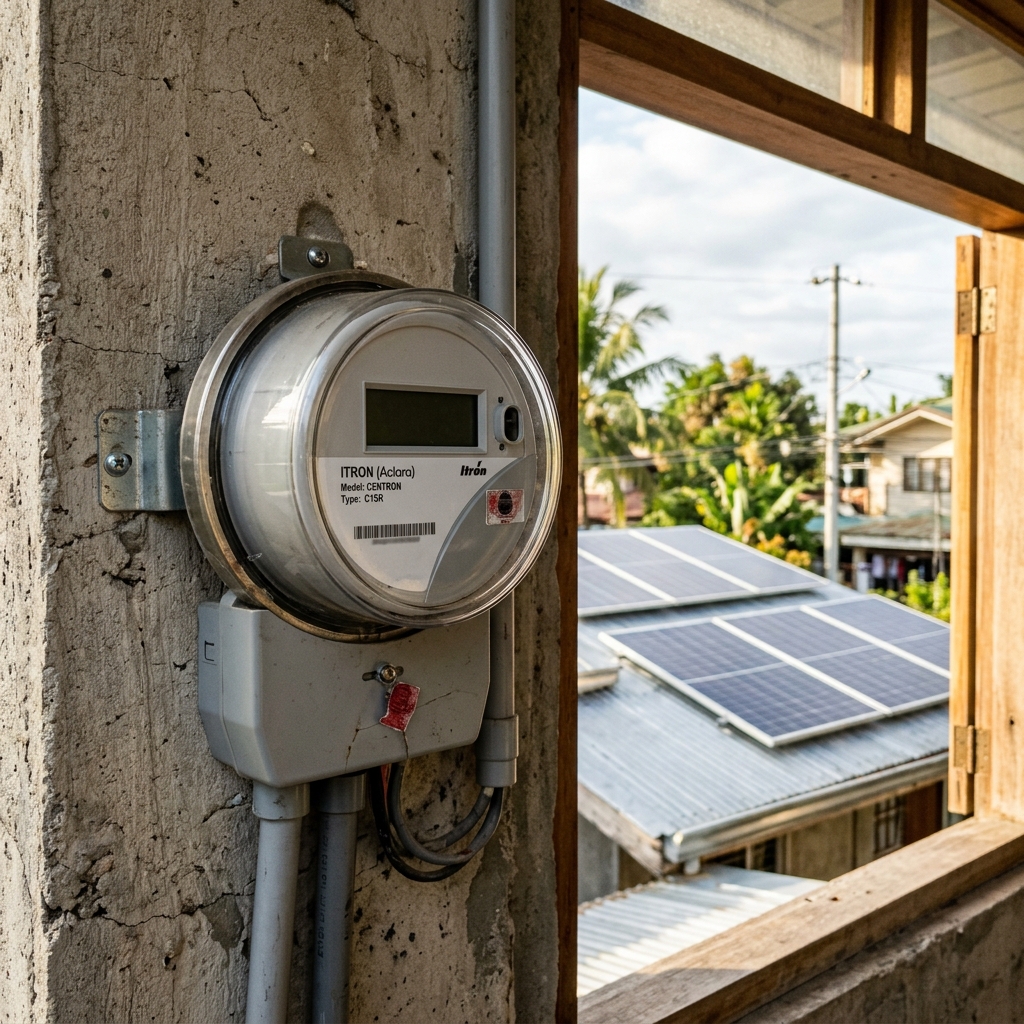
Net metering is a government program that lets you sell excess solar electricity back to your utility company — Meralco, VECO (serving Cebu City, Mandaue, Lapu-Lapu and surrounding Metro Cebu), CEPALCO (serving Cagayan de Oro and Misamis Oriental), or whichever distributor covers your area. You don't actually get a check; instead, you get credits on your electricity bill.
Think of it like a bank account for electricity. During the day, when your solar panels generate more than your home uses, the excess flows out to the grid — and your meter runs backward (or in the case of smart meters, records the export). At night or during cloudy days when you're drawing from the grid, those accumulated credits offset what you owe.
The program was established under the Renewable Energy Act of 2008 (Republic Act 9513) and has been refined several times since. Today it's available to any solar customer with a system of 100kW or less — which covers essentially all residential and small commercial installations.
How It Works Day-to-Day
Here's a typical weekday for a 6KW solar system owner with net metering:
- 6AM–8AM: Solar starts generating. Powers morning appliances — ref, lights, water heater. Small export to grid.
- 8AM–4PM: Peak solar. You're at work. Home uses minimal electricity. System exports most of its production to the grid → credits accumulating.
- 4PM–10PM: You're home. Heavy usage — aircon, cooking, TV. System draws down battery (if hybrid) and/or grid. Uses accumulated credits.
- By end of month: Your bill shows net consumption. If exports > imports, your bill could be near zero or show a credit to carry forward.
Important: Philippine net metering doesn't pay you cash for excess generation. Credits carry forward month-to-month but aren't converted to cash. The goal is to achieve the lowest possible bill, not to profit from electricity sales.
Who Can Apply for Net Metering
The requirements are pretty straightforward:
- Your solar system must be within your utility's distribution area
- System capacity must be 100kW or below (all residential systems qualify)
- System must be properly permitted and installed by a licensed electrical engineer
- Your home must have a bidirectional meter installed (the utility usually does this as part of approval)
- You must have an active account in good standing with your distribution utility
How to Apply — Step by Step
Complete Your Solar Installation
Net metering can only be applied for after your system is fully installed and commissioned. Your installer should provide the technical documents you'll need.
Gather Required Documents
You'll need: completed application form (from your utility), electrical permit, as-built drawing/single-line diagram, installer's PEC certificate, your account number and recent bill, and photos of the completed installation.
Submit to Your Distribution Utility
File at your utility's office (Meralco has a dedicated renewable energy desk). Some utilities now accept online submissions. Keep copies of everything.
Utility Inspection
The utility sends a technician to inspect the installation and install a bidirectional meter if you don't already have one. This usually takes 2–6 weeks to schedule.
Interconnection and Approval
Once approved, your interconnection agreement is signed and you're officially on net metering. Your next billing cycle will reflect the program.
Realistic timeline: The whole process — from submitting your application to getting your first net metered bill — typically takes 2 to 4 months. Utilities like Meralco have improved this significantly in recent years, but rural distributors can be slower. Don't stress if it takes a while; your solar is still saving you money in the meantime.
How Long Does the Whole Thing Take?
Between document preparation, utility processing, meter installation, and interconnection agreement, most applicants in Metro Manila and Cebu complete the process in 2–4 months. Rural or provincial areas can take 4–6 months depending on the local distribution utility's backlog.
SolarStream guides you through the net metering application process as part of our installation service. We'll walk you through the required documents, explain each step, and let you know exactly what to expect from your distribution utility — so you're never left guessing.
Applying in Cebu or Mindanao? Net metering timelines vary by utility. Solar customers in Metro Cebu use VECO, while Davao City customers use DLPC, and Cagayan de Oro uses CEPALCO. Each has its own application desk and timeline. We can guide you through the specific process for your area — get in touch.
How Much Will You Actually Earn?
Your net metering earnings depend entirely on how much excess you export. A homeowner who's out all day with a 6KW system could easily export 10–15kWh daily during the work week. At ₱11/kWh in credits, that's ₱3,300–₱4,950 per month in bill credits.
The reality for most hybrid system owners is a bit different — batteries capture most of the midday surplus, which you then use at night instead of exporting. You end up using more of your own solar and exporting less, but your bill is still very close to zero.
Common Questions About Net Metering
Can I get net metering with a hybrid solar system?
Yes, absolutely. Hybrid systems with batteries still export excess solar to the grid. The battery just captures more of the daily surplus first, which means less export — but also lower bills since you're using your stored energy at night instead of buying from the grid.
What happens to excess credits at year-end?
Under current ERC rules, credits carry forward monthly. If your annual exports significantly exceed your imports, you may be able to apply for a cash refund at the distribution utility's "avoided cost" rate — which is typically lower than the retail rate. In practice, most well-sized systems stay in balance.
Do I need net metering to benefit from solar?
No. Your solar saves you money regardless of net metering — by directly offsetting what you'd otherwise buy from the grid. Net metering is a bonus on top of that, especially if you're away from home during peak solar hours.
We'll Guide You Through Net Metering
Not sure where to start? SolarStream walks you through every step — documents, utility requirements, and what to expect — so the process is clear and stress-free.
Talk to Our Team